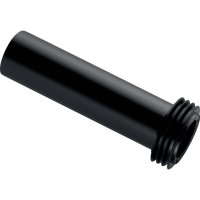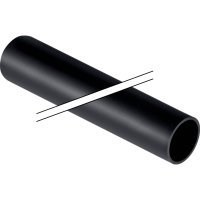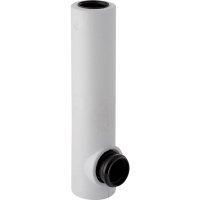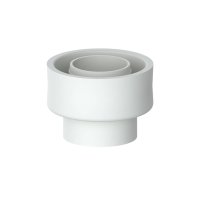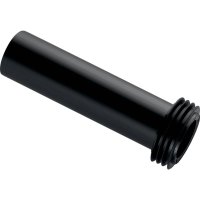
Flush Bends are essential plumbing components designed to redirect flush pipes around obstacles or connect cisterns to toilet pans when a straight piping route is not possible.
About Flush Bends
Flush bends provide directional changes—typically at 90° or 45° angles—for toilet flush pipes. They are commonly used in low-level or high-level cistern systems where the pipe needs to navigate walls, ceilings, or structural limitations. Available in both plastic and metal finishes, flush bends often come with integrated seals to ensure leak-free operation.
See more
Benefits
- Enhanced flexibility: Allows flush pipe routing around obstacles or in tight spaces.
- Leak prevention: Often includes rubber seals or integrated gaskets for secure connections.
- Improved design compatibility: Available in white, black, or chrome options to match bathroom aesthetics.
- Corrosion resistance: Durable plastic and chrome-plated materials extend product life.
- Quick installation: Suitable for push-fit or compression fittings.
Applications
- Low-level and high-level cistern toilet installations.
- When connecting cisterns positioned off-centre or at a different angle.
- Retrofit installations or where structural obstructions are present.
- Commercial and residential sanitary systems.
- Replacement and maintenance works.
Key Features
- Available in 45° and 90° bend angles.
- Compatible with both plastic and metal flush pipes.
- Standard and adjustable-length options.
- Push-fit, compression, or solvent weld installation types.
- Manufactured in PVC-U, ABS, or chrome-plated brass.
- May include adjustable collars or sealing rings.
Installation & Maintenance
Ensure the bend angle and size match the flush pipe diameter. Always check that seals are properly seated to prevent leaks. During installation, avoid excessive force to maintain joint integrity. Periodic inspection is recommended, especially in commercial or heavy-use environments.